Posts

Showing posts with the label HCI

PhD Journal Articles
Image
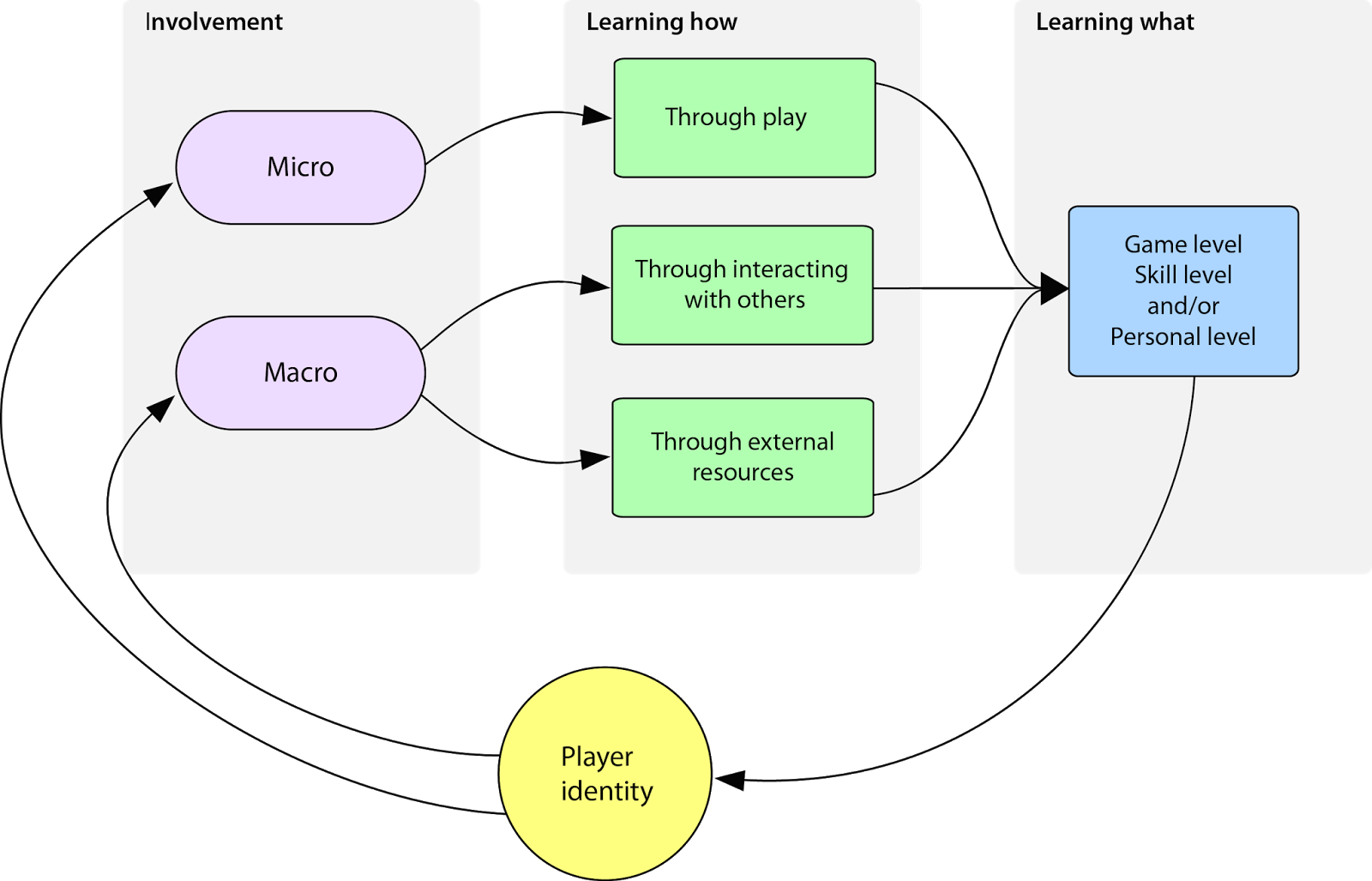
I'm pleased to announce I now have two more papers published on my PhD research. The first article, " Game-Play Breakdowns and Breakthroughs: Exploring the Relationship Between Action, Understanding and Involvement " is in Human Computer Interaction and focuses on the case studies I carried out how they resulted in a theory of the relationship between learning and involvement within the context of games. The theory is represented as a set of 14 claims that relate to: micro and macro involvement; breakdowns and breakthroughs in action, understanding and involvement; progress ; and agency, meaning and compelling game-play . In particular, the paper emphasises the ways in which players experience learning via breakthroughs in understanding, where involvement is increased when the player feels responsible for progress. We also argue that supporting the relationship between learning and involvement is vital for ensuring the success of commercial and educational games. (Y...

CHI Play 2014: Toronto

Image
Last month I went to the first CHI Play conference in Toronto - and it was fun :-) The full papers from the conference are openly available for a short time only so make sure to check them out here . On the Sunday I took part in the somewhat provocatively titled "Participatory Design for Serious Game Design: Truth and Lies" workshop organised by Rilla Khaled, Mina Vasalou, Vero Vanden Abeele, and Maarten Van Mechelen. Participatory design (PD) is something I've recently become more interested in and our submission " Designing Persuasive Games through Competition " was about how PD influenced the organisation of the competition I ran at UCL earlier this year and some of the tensions that arose during the whole process. The workshop was a great experience as I got to meet a load of interesting people and to hear about different types of PD game research . And I learnt that defining PD, while a good learning experience, isn't particularly easy! On the followin...

CHI 2013 (Part II) - Citizen Science, biometrics, gamification@work and student games

Image
So on to part two. Apart attending a workshop, I also presented a poster at CHI: Do Games Attract or Sustain Engagement in Citizen Science? A Study of Volunteer Motivations (see below). The poster is based on some work being carried out as part of the Citizen Cyberlab project that Charlene Jennett and Anna Cox are involved with. The paper reports on the findings of a set of pilot interviews that Cassandra Cornish-Trestail carried out with people who play citizen science games - in this case, Foldit and Eyewire . The answer to the question in the title is no, game mechanics didn't seem to attract volunteers but, in addition to tools such as chat facilities and forums, they do help to sustain involvement over time. Essentially, the people who play these games are already interested in science, they aren't gamers. In addition, what game mechanics allow for is greater participation in a range of social interactions while also providing ways in which to recognise volunteer ach...

CHI 2013: Paris (Part I) - MOMA, games and learning, game players and the Games SIG

Image
Last week I went to CHI in Paris - it's been a while since I've been to a major academic conference and I seem to have gotten out of the habit of blogging so I thought I would use this as an excuse to get back into it :-) Plus there was a lot of game sessions that have got me thinking. It all started last Sunday with the MediCHI workshop . This was a good opportunity to talk to about the work I'm doing on CHI+MED , with respect to medical device safety, and to meet others in the field. The main conference started on Monday with a keynote from Paola Antonelli from MOMA . She gave us an overview of lots of intriguing design projects that MOMA has exhibited and while no specific HCI challenges were made explicit during the talk, I was reminded about how technology, including games, can make people think. Particularly interesting examples include PIG 05049 (Christien Meindertsma) and the Menstruation Machine (Hiromi Ozaki/Sputniko!). She also mentioned their recent games col...

Interactive punching bag

Image
Ok, so this isn't directly game related but it could be, depending on what you use the device for. This summer, six 18/19-year-olds built an interactive punching bag as a summer project at the Open University. Think of it as a game interface, with lights, sounds and sensors. If you like it, please feel free to do so on youtube and to share the video as it would be great to give their work some exposure.